Wedding Ceremonies in Italy
Religious, Civil and Symbolic Wedding Ceremonies for International Couples
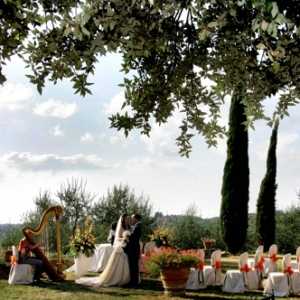
Planning a wedding in Italy means entering a world where history, art, spirituality and beauty naturally converge. From the sunlit cliffs of the Amalfi Coast and the timeless elegance of Lake Como to the vineyards of Tuscany and the artistic grandeur of Florence, Venice and Rome, Italy offers an extraordinary setting for wedding ceremonies of every tradition and faith.
Couples may choose a legally valid civil wedding, a religious ceremony rooted in centuries of ritual and belief, or a symbolic celebration designed purely around personal meaning and aesthetic vision. Italy welcomes couples from every nationality, culture and religion, offering refined and deeply emotional wedding experiences shaped by authenticity and excellence.
At P&J Events, we specialize in designing and producing wedding ceremonies in Italy for international luxury clients. Our role extends far beyond planning: we guide couples through legal frameworks, religious and cultural protocols, venue selection, ceremony design and full scale production, ensuring every detail reflects both personal identity and the highest standards of elegance.
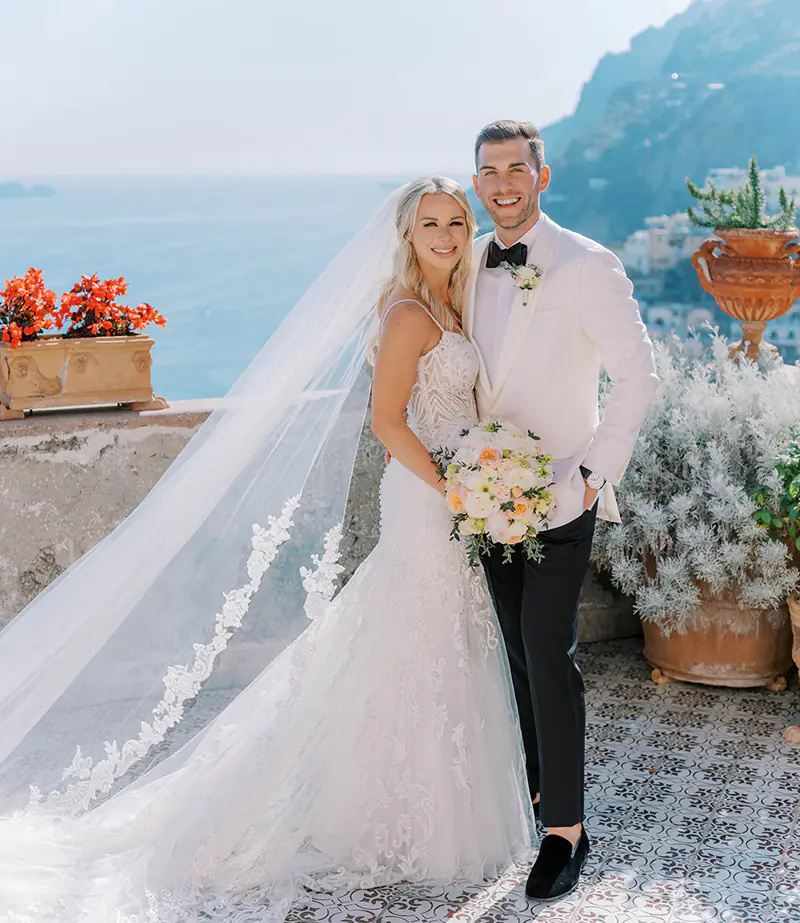
Types of Wedding Ceremonies in Italy
Italy offers one of the widest and most sophisticated ranges of wedding ceremony options in the world. Civil ceremonies, religious weddings and symbolic celebrations can all be hosted within extraordinary architectural and natural settings, from historic palaces and sacred sites to private villas, gardens and waterfront estates.
Below is an overview of the main wedding ceremony types in Italy, with a focus on structure, cultural value and possibilities for international couples.
CIVIL WEDDING CEREMONIES IN ITALY
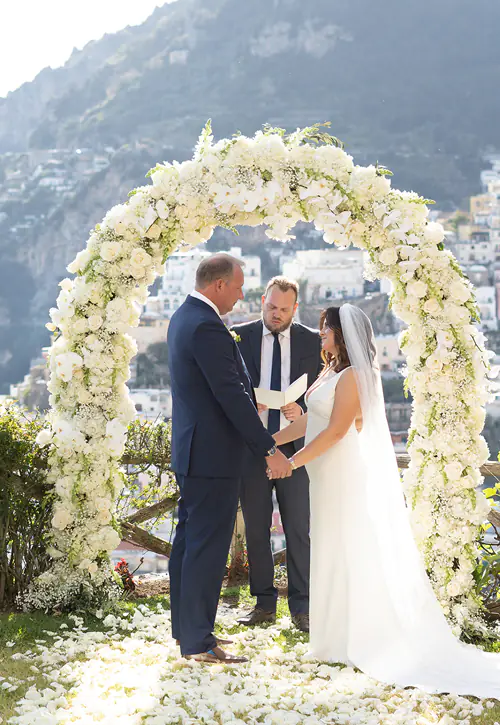
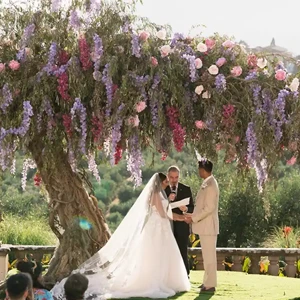
A civil wedding in Italy is a legally binding marriage officiated by an authorized civil officer. Ceremonies can take place not only in town halls, but also in approved locations such as historic palaces, castles, panoramic terraces, gardens and private waterfront venues officially delegated by the municipality.
Civil ceremonies are particularly appreciated by international couples for their clarity, flexibility and legal recognition abroad. They allow full personalization of vows, readings, music and ceremony flow, without religious constraints, while remaining entirely valid under Italian law.
Foreign couples interested in this option can explore documentation, legal requirements and authorized venues in our dedicated guide to civil weddings in Italy for foreigners .
RELIGIOUS WEDDING CEREMONIES IN ITALY
A single category embracing multiple faiths and traditions
The category of Religious Wedding Ceremonies in Italy includes a wide spectrum of faith based celebrations, each respected in its theological, cultural and ritual integrity. Within this framework fall Catholic, Protestant, Jewish, Islamic, Indian religious traditions and Persian and Zoroastrian inspired ceremonies.
Some religious weddings may also hold legal validity when performed under specific agreements and with correct documentation. In other cases, couples choose to pair a religious ceremony with a civil marriage to ensure full legal recognition.
Italy offers exceptional settings for religious ceremonies, including historic churches and basilicas, synagogues, temples, private estates and carefully selected venues adapted to ceremonial requirements.
Couples wishing to celebrate a faith based ceremony can explore our complete guide to religious weddings in Italy for foreigners .
Catholic Weddings in Italy
Catholic weddings in Italy are among the most iconic in the world, celebrated inside extraordinary churches, basilicas and sanctuaries rich in spiritual and artistic heritage. Depending on documentation and concordat agreements, Catholic marriages may also be legally valid.
These ceremonies appeal to couples seeking sacramental depth, solemn ritual and timeless symbolism, often enhanced by sacred music, formal liturgy and architectural magnificence.
Protestant Weddings in Italy
Protestant wedding ceremonies may be celebrated in Protestant churches, chapels or, in certain cases, private venues with a minister and pastoral authorization. These ceremonies are valued for their balance between spiritual meaning and personal expression, allowing flexibility in vows, readings and ceremony structure while maintaining religious integrity.
Jewish Weddings in Italy
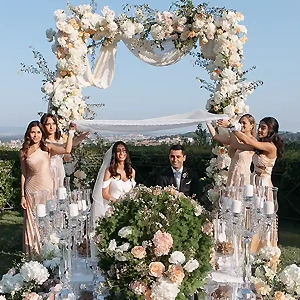
Italy has an ancient and respected Jewish heritage and hosts exceptional Jewish wedding ceremonies. Traditional elements include the Chuppah, Ketubah, Sheva Brachot (Seven Blessings) and celebratory moments that follow the ceremony.
Depending on rabbinical approval, Jewish weddings in Italy may be held in synagogues or in private villas, gardens and historic palaces. When required, we assist with kosher planning, coordinating authorized kosher catering and supervision frameworks in line with community standards.
Islamic Wedding Celebrations within Timeless Italian Luxury
Muslim weddings in Italy are increasingly chosen by high profile families from the Middle East, the Gulf region and Southeast Asia who seek refined beauty, discretion and cultural respect in an exceptional European setting.
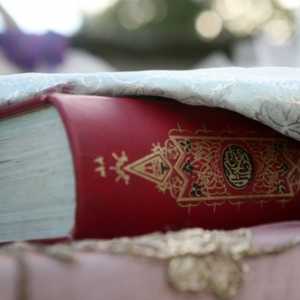
The religious celebration is traditionally marked by the Nikah, a sacred and meaningful ceremony based on spiritual consent, family presence, witnesses and the Mahr agreement. In Italy, the Nikah can be elegantly integrated into a highly curated wedding experience, designed with elevated aesthetics while fully respecting Islamic values, modesty and ceremonial traditions.
Indian Wedding Ceremonies in Italy
Distinct traditions within a shared cultural universe
Indian weddings in Italy represent some of the most elaborate and emotionally powerful celebrations hosted in Europe. They are not a single format, but a collection of distinct religious and cultural traditions, each with precise rituals, timings and symbolic meanings.
Italy offers the space, infrastructure and elegance required to host multi day Indian weddings at the highest level.
• Sikh Weddings in Italy
Sikh wedding ceremonies traditionally follow the Anand Karaj, centered around the Guru Granth Sahib and the Laavan. Where possible, ceremonies are held in a Gurdwara; alternatively, authorized venues are adapted to respect ritual requirements, seating protocols and spiritual atmosphere.
• Hindu Weddings in Italy
Hindu weddings ceremonies include sacred fire rituals beneath the Mandap, with ceremonies such as Ganesh Puja, Kanyadaan, Mangal Pheras, Saptapadi and Sindoor, varying by regional background. Careful attention is given to ritual orientation, ceremonial objects and priest requirements, allowing Italian venues to become authentic ceremonial spaces.
• Indian Pre Wedding and Social Ceremonies
- Mehndi ceremony
- Sangeet evening
- Haldi ritual
- Baraat procession
- Welcome dinners and after parties
• Persian and Zoroastrian Inspired Weddings in Italy
Persian wedding ceremonies are distinguished by their poetic symbolism and refined aesthetics, most notably through the Sofreh Aghd. This ceremonial spread incorporates meaningful elements such as the Mirror and Candlesticks, sacred texts, honey, sugar cones for the sugar grinding ritual, nuts, spices, flowers and symbols of fertility, light and prosperity.
Many couples also reference ancient Iranian heritage and Zoroastrian inspired symbolism, emphasizing concepts of light, purity and balance. These ceremonies are deeply meaningful while remaining visually elegant, especially when set within Italian villas, palaces and panoramic gardens where the Sofreh becomes both a spiritual and artistic focal point.
LEGALLY RECOGNIZED CEREMONY STRUCTURES FOR INTERNATIONAL COUPLES
For international couples, legal recognition is often a fundamental consideration. In Italy, it is possible to celebrate a wedding that is fully legally valid under Italian law and formally recognized worldwide as a legal marriage, not only through traditional town hall ceremonies.
Italian legislation allows specific officiants, when formally appointed as civil status officers, to celebrate legally binding marriages outside standard municipal settings. This principle is well established in Italian law and is comparable to the legal framework under which Catholic priests, when duly authorized, officiate marriages that are simultaneously religious and legally valid.
For over 25 years, our team has been able to offer international clients access to these legally recognized ceremony structures, allowing couples to celebrate their marriage in refined, meaningful and highly personalized settings, while maintaining full legal validity and international recognition. You may explore further details about our legally recognized wedding ceremonies in Italy.
This approach enables couples to experience a single, cohesive ceremony that unites legal substance with cultural, spiritual or symbolic significance, eliminating the need to separate the legal act from the emotional celebration.
Each case is carefully evaluated based on nationality, documentation and jurisdictional requirements. Our role is to guide couples through this process with precision, discretion and absolute clarity, ensuring a wedding ceremony in Italy that is not only beautiful and meaningful, but also legally secure and recognized worldwide.
SYMBOLIC WEDDING CEREMONIES IN ITALY
A symbolic wedding in Italy offers complete creative freedom, without legal or religious limitations. These ceremonies are ideal for couples already legally married, interfaith couples, or those seeking a purely personal and experiential celebration.
International couples can discover all details about planning a symbolic wedding in Italy for foreigners .
Why Choose Italy for Your Wedding Ceremony
- Artistic, architectural and natural beauty
- World renowned cuisine and wine culture
- Exclusive private estates and historic venues
- Expertise in destination wedding logistics
- Exceptional potential for refined multi day celebrations
Whether civil, religious or symbolic, wedding ceremonies in Italy create memories of lasting emotional power.
YOUR WEDDING IN ITALY BEGINS HERE
Effortless, Beautiful, Unforgettable.
FAQ — Wedding Ceremonies in Italy
Yes. Couples from around the world can obtain a legally binding civil wedding in Italy following specific documentation procedures that vary by nationality. We assist with all requirements and local coordination.
Late April to mid October offers ideal weather. May, June, September and early October are considered peak months for outdoor ceremonies.
For luxury venues and high demand dates, we recommend booking 12 to 18 months in advance.
Yes. Many municipalities authorize outdoor locations such as panoramic terraces, gardens and historic estates.
Absolutely. Civil ceremonies allow broad personalization of vows, music and symbolic rituals.
At least one partner must be baptized Catholic and both must complete the required preparation according to church regulations. Additional documentation depends on parish and diocese.
It may be, depending on documentation and applicable agreements between church and civil authorities.
In Protestant churches, chapels or private venues with pastoral authorization.
Yes, many Protestant traditions encourage personalization.
Yes, with rabbinical approval. Many couples choose private gardens, palaces and seaside villas.
Yes, we can collaborate with authorized kosher caterers and supervision when required.
Yes. Italy is a leading destination for Sikh and Hindu weddings and supports full ceremonial protocol.
Absolutely. Venues across Italy can host Mehndi, Sangeet, Haldi, Baraat and large receptions, with proper planning and logistics.
Yes. Persian couples can design a full Sofreh Aghd in villas, palaces or outdoor estates.
Yes. Many international couples choose dual ceremonies, combining a civil wedding for legal registration with a religious or cultural celebration.
No. Symbolic ceremonies are flexible and require no bureaucracy, but they have no legal value.
Almost anywhere, including villas, castles, vineyards, yachts, beaches and private islands.
A civil wedding is legally binding, while a symbolic wedding has no legal value but offers complete freedom. Couples can explore both options in our guides to civil weddings for foreigners and symbolic weddings for foreigners.
Plan Your Wedding Ceremony in Italy
At P&J Events, we design refined, culturally intelligent and fully bespoke wedding ceremonies for luxury international couples. From Lake Como and the Amalfi Coast to Tuscany, Rome, Venice, Florence and Sicily, we transform visions into poetic realities crafted with precision and soul. Contact us to begin planning your wedding ceremony in Italy. We would be honored to accompany you.