Getting Married in a Garden
A garden wedding can be extraordinarily elegant because the setting already provides light, vegetation, architecture and atmosphere.
It should never, however, be approached as though it were simply a ballroom without a roof.
A garden is alive: the ground changes with weather, plants react to heat, trees create shade and wind patterns, service routes may be difficult and power may not exist where it is needed.
A successful garden wedding therefore requires a production plan built around the landscape itself. The objective is to work with the property rather than force a conventional event layout onto a living environment.
A Garden Has No Natural Plan B
The greatest strength of a garden is also its principal vulnerability: it is outside.
Rain, wind, humidity, extreme heat and sudden changes in temperature are not theoretical possibilities; they are part of outdoor event planning, and they need to be considered before the final layout is approved.
This makes the weather strategy one of the most important elements in selecting a garden. A beautiful outdoor plan without an equally credible alternative is not a complete wedding plan.
The Greenhouse as Temporary Architecture
In many important gardens, the best solution is a temporary greenhouse or transparent pavilion designed specifically for the property. We do not consider this simply a tent to be used if it rains.
It is temporary architecture, and its proportions, transparency, roof line, entrances,
flooring and relationship with trees and historic buildings should be designed with the same attention given to every other element of the wedding.
A poorly positioned structure can damage the perception of a magnificent garden; a carefully designed greenhouse can become part of it. At its best, guests should almost feel that the structure has always belonged there.
Protecting the Garden During an Event
One of the most underestimated aspects of a garden wedding is that the venue surface itself is alive. A lawn is not a ballroom floor.
When the ground becomes wet or heavily humid, vehicle movement can create severe damage very quickly: tyres can slip, dig into the soil, tear grass and leave deep tracks that may require extensive restoration.
Wherever operationally possible, P&J Events prefers to keep ordinary vehicles completely off important lawns.
Moving equipment manually requires more labour and therefore costs more, but in a valuable garden the additional production cost can be insignificant compared with the cost of restoring damage.
Where mechanized movement is unavoidable, lightweight dedicated equipment or professional temporary access and ground-protection systems should be evaluated instead.
Irrigation Systems and What Lies Beneath the Lawn
The visible grass is only part of what must be protected.
Historic and contemporary gardens can contain irrigation pipes, sprinkler heads, electrical lines, drainage systems and other infrastructure immediately beneath or within the lawn.
A vehicle, stabilizing leg, heavy structure or incorrectly positioned fixing point can therefore create damage that is not immediately visible.
The technical plan should identify underground infrastructure before structures, heavy equipment or substantial loads are introduced into the garden.
Stages, Dance Floors and Structures on Grass
Stages, dance floors, kitchens, bars, technical platforms and event flooring can remain in position for many hours or several days.
During warm weather, a surface placed directly on grass can trap heat, restrict air and light and damage the lawn below.
Where appropriate, P&J Events prefers raised modular flooring and platforms that distribute load while creating separation from the underlying turf.
The objective is not simply to create a usable event surface; it is to protect the garden underneath it.
Why Prevention Costs Less Than Damage
Damage to an important garden can become extremely expensive.
If turf has to be reinstated immediately after an event, the owner may require removal of damaged material, soil preparation, replacement turf, irrigation repairs and intensive maintenance.
Spending more on hand-carrying equipment, protection systems, raised platforms and controlled access is often far more economical than paying for restoration later.
For P&J Events, protecting the property is part of professional event production, and those protective measures remain important during installation and dismantling as well as during the wedding itself.
Ground Conditions, Heat, Wind and Guest Comfort
A garden inspected during dry weather may behave very differently after rain.
Soil type, drainage, slopes and humidity all matter, and a lawn that appears completely stable during a sunny inspection may become soft, slippery or unsuitable for heavy use after prolonged rainfall.
This affects guests, catering, structures, furniture and production.
Wet grass also affects long dresses, formal shoes and high heels, so walkways, protected access routes or temporary flooring may be necessary even when the principal garden remains uncovered.
Luxury also means making sure guests never have to think about these difficulties.
Heat and wind need the same attention. The most beautiful ceremony location in the morning may become extremely hot in the afternoon, while coastal gardens and elevated properties can be particularly exposed to wind.
Sun orientation, natural shade, ceremony duration, guest comfort, flowers, candles, table settings, sound systems and temporary structures all influence where and how the wedding should be positioned.
Temporary Infrastructure Behind a Garden Wedding
Garden catering frequently requires substantial temporary infrastructure. The villa kitchen may be too distant, too small or unsuitable for the number of guests, and in some cases there may be no event kitchen at all.
The solution may involve a complete temporary catering area positioned close enough to maintain service quality but discreetly enough to remain invisible to guests.
The same principle applies to bathrooms and electricity.
A garden may visually accommodate hundreds of guests while the adjoining villa has facilities designed for a private household, and historic gardens rarely provide event power exactly where it is required.
Temporary restroom facilities, power distribution and independent generators may therefore be necessary.
- Catering preparation and refrigeration
- Water and waste management
- Temporary restroom facilities
- Independent power and distribution
- Service routes kept away from guests
- Greenhouse heating or climate control where required
Designing the Wedding Flow Through a Garden
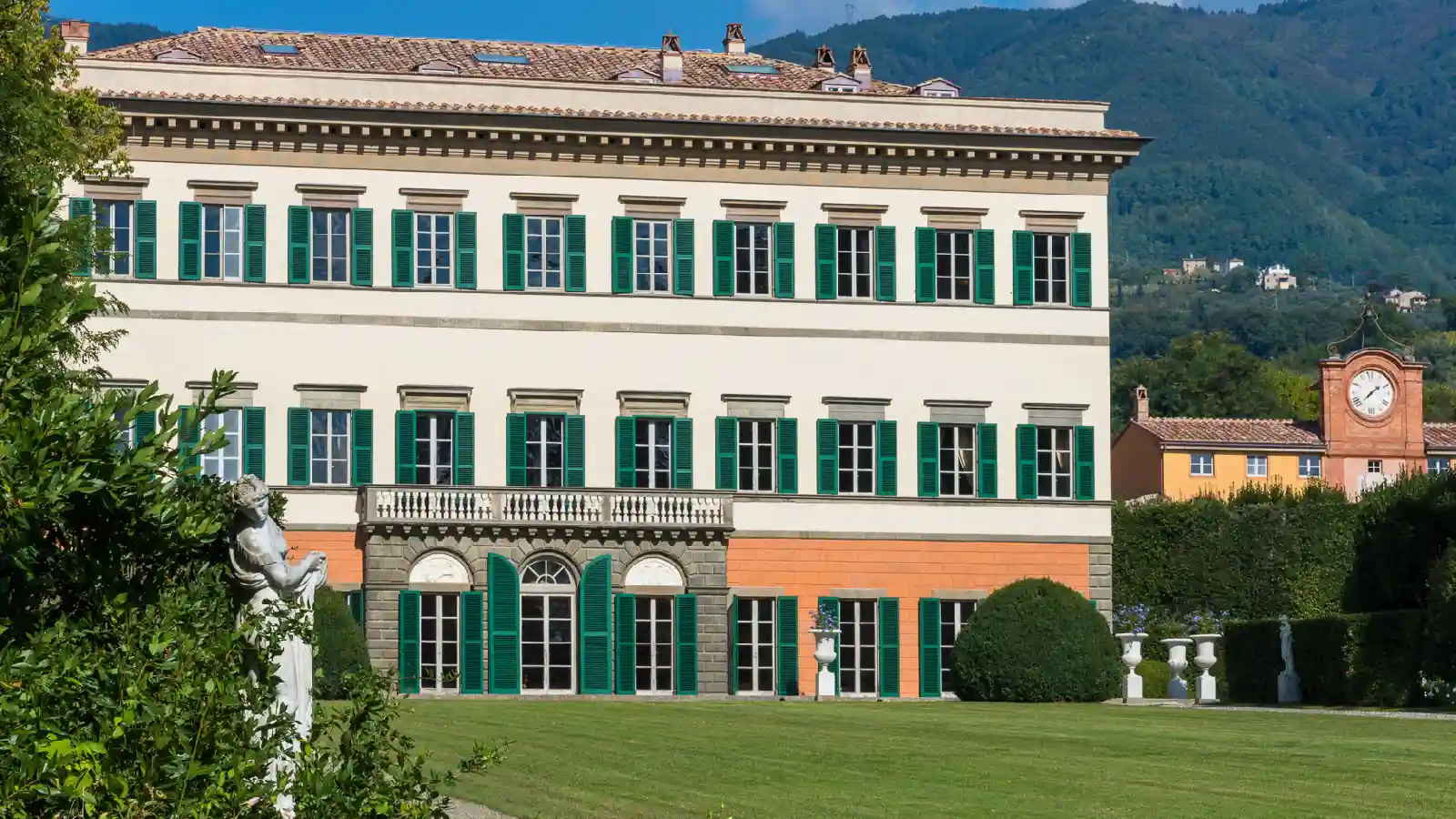
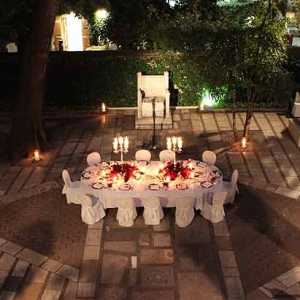
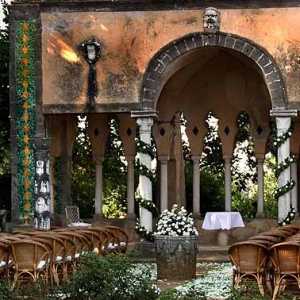
A garden is particularly suited to weddings that unfold through different spaces. The ceremony may take place beneath mature trees, cocktails beside a fountain, dinner on a formal lawn and dancing inside a greenhouse.
The fact that several beautiful areas exist does not mean all of them should be used: distances must remain comfortable,
paths must work for guests of all ages and service traffic should remain separate from guest circulation.
The strongest flow feels natural even though it has been carefully designed.
At night, lighting becomes part of that movement: a tree can become architecture, a distant façade can become the end of a visual axis, a sculpture can emerge from darkness and a fountain can become a focal point.
Good garden lighting decides what should remain visible and what can disappear.
Music, Privacy and Views
Visual privacy does not necessarily mean acoustic isolation.
A garden may appear secluded but still be close enough to nearby houses for sound restrictions to matter, so municipal regulations, neighbours and property rules should be checked before venue selection.
If late-night dancing is important, the possibility of moving the party indoors or into an acoustically protected structure should be evaluated in advance.
Some gardens are defined by what lies beyond them: Lake Como, the Amalfi Coast, Tuscan hills and the Mediterranean can become part of the composition.
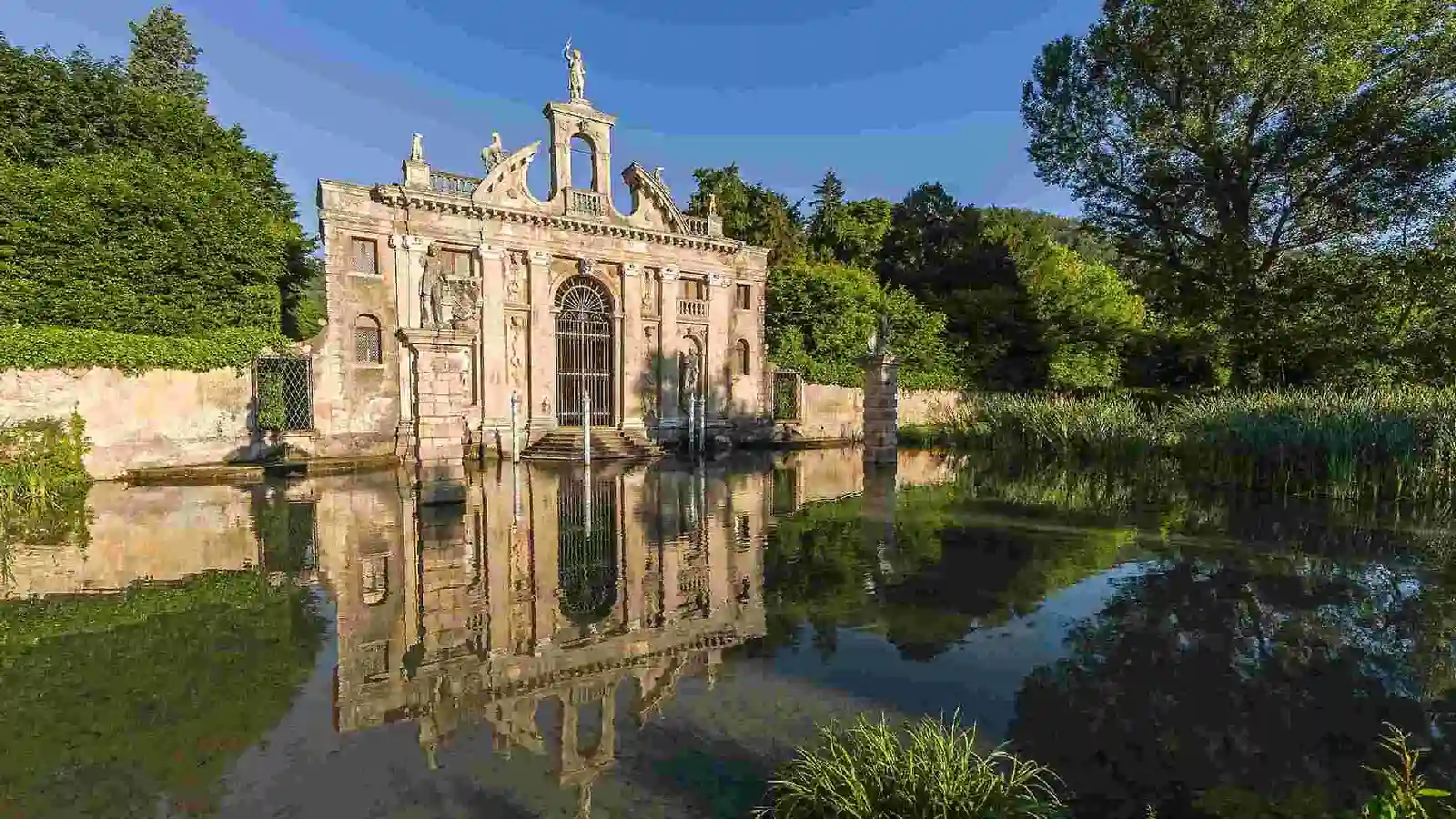
Others turn inward, using formal hedges, fountains, sculpture and trees to create a complete world within the garden itself.
Neither is superior; the important question is whether the wedding should look outward toward the landscape or inward toward the garden.
Legally Valid Civil Ceremonies in Italian Gardens
Some Italian municipalities have already designated particular private properties as official locations for civil weddings, which can simplify the process.
P&J Events, however, is not limited to a predetermined list of approved venues.
Through experience developed over decades, first during the Regency years and today under P&J Events,
we can evaluate the legal and administrative route required for couples who wish to celebrate their actual marriage ceremony in the private garden they have chosen.
Where the applicable requirements can be fulfilled, our objective is to coordinate a ceremony producing civil effects under Italian law directly within that setting.
For international couples, the resulting Italian marriage can subsequently be recognized abroad according to the relevant procedures, which may include apostille, legalization,
registration or transcription depending on the country.
Gardens can also provide settings for Protestant, Jewish, non-denominational and symbolic ceremonies.
Each requires its own religious, documentary and practical planning, and in each case the meaning of the ceremony should guide the design.
P&J Events and Italian Gardens
Our knowledge of Italian gardens developed during the historic Regency years and continues today under P&J Events.
As with villas and castles, we learned very early that photographs are not enough: a garden has to be walked, distances have to be experienced and the ground has to be understood.
Access, shade, catering, power, irrigation, Plan B and guest flow all need to be evaluated directly. Today Paolo, Jinane and the P&J Events team continue to visit gardens throughout Italy.
Some are properties where we have already produced weddings or events; others are gardens we have personally inspected and studied as possible future settings.
For us, knowing a garden means knowing both its beauty and its problems.